Tuesday, October 29, 2013

My Walk With Rosie

Today is the birthday of Klaus Roth born 1925 in Breslau, Germany which is now Wroclaw, Poland.  Klaus won a Fields Medal in 1958 for his work on approximating algebraic numbers by rationals.

Today's mathematics quote is from Lipa Bers who died on this day in 1993.  Bers said,"... mathematics is very much like poetry ... what makes a good poem -- a great poem -- is that there is a large amount of thought expressed in very few words. In this sense formulas like  or  are poems."

I often talk about Rosie in my classes.  We walk daily and we talk about life and mathematics.  To be truthful, I talk, she listens.  She wags her tail in agreement, pushes her head against my leg hoping for another treat, and keeps a wary eye out for the ever elusive squirrel.  She is a good listener.  She really likes my students.  She will plead their case with those big, brown, empathic eyes and ignore me when she disagrees when I make a disparaging remark.  She has convinced me of extending deadlines and sniffed out creative ideas for me to use in my teaching.  She is quite the dog!


I have really come to detest school district meetings.  Actually, most meetings.  My assigned hell will be sitting in a meeting for eternity, filling out forms.  This distaste is a recent phenomenon.  For thirty years, I was tolerant of the meetings, looking for information that would enhance my teaching.  I guess I am a slow learner.  I have started to keep a small notebook to do math problems and to write down any math ideas that I would like to further investigate.  During our most recent district meeting, I drew this graph of a walk with Rosie.  I showed it to her that day during our afternoon walk.  She licked it so  I drew it again.  "Ah", I thought, "She liked it so well, she licked it!" She wants me to show this to my class!  With Rosie's inspiration, I assigned my students to find what mathematics, specifically calculus, existed within the graph.

The graph depicts my position from my home on a walk with Rosie.  The vertical axis indicates the distance in feet that I am from my home.  The horizontal axis is the time in minutes of the walk.


Here are the top ten of their responses:

1)  "The derivative at (20, 50) is 0 because it* is a horizontal."

2)  "From the time of 0 to 15 min you were walking at a rate of 3 1/3 ft/min."

3)  "The interval [30, 45] has a slope of 20/3 ft/min."

4)  "Kruger realized he was late so started slow then sped up until he got back to his house 15 min later."

5)  "At the interval 15 - 30 minutes, Kruger and Rosie stopped walking, the graph shows this by staying at a horizontal line."

6)  "At 45 mins Rosie and you ran/dragged home for some unknown reason.  Obviously something changed, maybe Rosie saw Sam (her god) coming home and she started chasing him.  In the last 15 mins of your walk your average rate was 10 ft/min.  In the last 15 mins you double the average rate of your whole travel."

7)  "Mr. Kruger needed some deep, philosophical questions answered from his loyal and trusty sidekick, Rose, so they decided to go for a walk, discussing life.  Starting off, they walked increasingly faster and ended up walking 50 ft in 15 minutes.  Mr. Kruger and Rosie were having a jolly good time, but then Rosie met a friend of her's, a Border Collie, so they stopped to chart for 15 minutes while Mr. Kruger sat down on a nearby bench and worked on math problems.  Mr. Kruger had almost finished his 743rd problem when Rosie looked up and saw a radioactive ninja mutant squirrel terrorizing the local children!  Rose got up and pulled Mr. Kruger along at a hearty sprint, speeding up.  They ran 100 feet in 15 minutes."

8)  "The slopes of the tangent lines of the parabola are positive, then zero at (45, 15), the negative"

9)  "From (30, 50) to (45, 150), the slope rises quickly at an average rate of 20/3 ft/min.  At the peak/maximum of the parabola (45, 150), the slope changes to an negative, downward, average rate of 10 ft/min.

10)  "The biggest and most obvious fact shown on f(x) is that Kruger and Rosie walk extremely slow and don't get very far at all while taking breaks on their 300 foot walk.  (0, 0)...(60, 300).  Based on that, their average rate is 5 ft/min.  At that pace, I wouldn't recommend a marathon.  It would take you over 19 days!"

Another great idea Rosie!  Thanks!  Arf :-)

* I think it that is being referred to is a tangent line at that point.

Wednesday, September 18, 2013

The Circle of Geometry

Today is the birthday of William Metzler born 1863 in Odessa, Ontario, Canada.  Metzler was a Canadian Mathematician who taught at Syracuse University and Albany Teachers Training College.  He published papers in the Proceedings of the European Mathematical Society.  His focus was on the theory of matrices and determinants.

A long time friend, Dick, and I were enjoying each other's company, reminiscing about our high school educational experiences.  After a brief lapse in the conversation, Dick stated "I should send an apology to my high school geometry teacher."  I asked why.  Dick sighed and replied, "I hated that class.  I thought it was so pointless.  Who would of thought that many of my conversations now, are with architects and revolve around geometric relationships and buildings."  I smiled, "The circle of geometry."

The circle of geometry.  I am fascinated by the circle.  The circle has been symbolic of the sun, life, boundary, completion, returning cycles, and unification of two lives as represented by wedding rings.  As I consider the circle, I think a more appropriate symbol for me is the helix.  This geometric shape combines the returning cycles of life and the experiences I gather each year.  As I garner each experience and the circle attempts to complete itself, it rises slightly, never competing the task but starting a new revolution above itself.


In mathematics, a helix is defined as a curve in three-dimensional space for which the tangent at any point makes a fixed angle with an axis.  Springs, screws and hand rails on stairwells are examples of helices.  Helices can be right-handed or left-handed.  At my dad's welding shop, there was a machine that put threads on metal rods.  Most of those threads were right-handed.  What I view as the growth of the helix is called the pitch and is measured parallel to the axis of the helix.  The equation for a helix is a parametric equation.  An example would be: x(t) = cost t; y(t) = sin t; and z(t) = t.  x(t), y(t), and z(t) are functions in three-dimensional space such that at t increases the point (x(t), y(t), z(t)) traces a right-handed helix with a pitch of 2pi radians and a radius of 1 unit about the z-axis.

In music, pitch space is often single or double helices.  These helices often extend out of a circle of fifths to represent an octave equivalency.  The DNA, double helix is probably the most famous geometric shapes known to mankind.


A molecule that encodes the genetic instructions used in the developing and function of all living organisms.  The circle is complete.  The circle of geometry.  The circle of life.

Wednesday, September 11, 2013

Proof and The Problem

Today is the birthday of Sir James Jeans born 1877 in Lancashire, England.  Jeans worked on astronomy, thermodynamics, heat and other aspects of radiation.  He was knighted in 1928.  Jean said, "We may as well cut out the group theory.  That is a subject that will never be of any use in physics."

I have been working on The Problem (see previous blog) for some time.  The problem has to do with a point moving about a circle and the construction of two lines and a line segment.  The first line passes through (0, 0) and the point (P) on the circle.  The line segment also has P and (1, 0) as its endpoints.  The second line is the perpendicular bisector (a line that forms a 90° angle and passes through a midpoint) of the line segment. The resulting intersection (T) between the first line and the perpendicular bisector forms an ellipse as P traverses the circle. A diagram with these conditions is imbedded in the proof below.  A colleague of mine asked me if the tracings of T truly formed an ellipse.  "Truly an ellipse" ... a simple question that requires proof from the recipient.

I was talking with my son recently and he was giving some feedback about my blogs.  I told him I wanted to blog about my proof and he asked why.  Why was proof important?  Why should he care?  Why should anyone care?

I remember when I first learned about proofs.  That learning occurred in geometry.  I struggled at first.  I was in a study hall, frustrated, and convinced I had reached the limit of my capacity to understand mathematics.  It was at this moment that the notation of a career as a lobster fisherman first emerged.  Almost simultaneously, the linkage of the proof registered.  I find a fact through the deduction process and use that fact to deduce another, linking those facts to my final conclusion ... a proof.  I justified each linkage with either a definition, an axiom, or a previous known fact (theorem).  I had an argument that verified truth without exemption.  A truth that wasn't based on opinion, emotion, tradition, or limited experience.

Recently, I experienced a conversation between two of my colleagues.  The first colleague was stating what he believed were facts based on his experience and "research".  He was attempting to link his supposed facts to prove a conclusion.  The intended conclusion was not only unknown by the listeners but also unknown by him.  The second colleague was challenging some of the facts and logic of the first colleague in a tactful manner.   The following is an excerpt of the conversation.  First colleague, "What do you think the median annual income of our area is?"  Second colleague, "Oh, I would say about $50,000."  First colleague, "No, you are way off, $46,000 at best".  After a brief search on my laptop, I chirped in "The median annual income of our area is $51,000."  First colleague, "No that can't be right.  What figures are you looking at?"  My response, "2013 figures stated in the local paper dated last week".   The frustration I have with proofs that are formed by many people to demonstrate a particular point of view is that those proofs often are unstructured and use "facts" that have not gone through verification.  Mathematics offers structure and verified facts.  I can determine truth in mathematics given a set of agreed upon definitions and conditions.  Euclid demonstrated that in his book, Elements.  Mathematical proof can serve as a model for a more logical and coherent argument.

I think we all look for absolute truths.  I believe they exist.  Kurt Godel proved that there exist absolute truths that cannot be proven mathematically.   "Is it truly an ellipse?"  "If it walks like a duck and quacks like a duck, is it a duck?"  The mathematician would say prove it.

Proof for me breaks the concept down in workable parts.  I am somewhat confident that the individual that determined the construction of the ellipse that I stated above used the proof that I am to submit, to foster its creation.  My proof is not unique.  I am sure of that but the proof verifies that what I believe to be true, actually is.  As I examine what I am trying to prove, I am forced to look at each individual part, determine both its linkage and its justification.  I feel this process allows me to understand the workings of the concept, its connections to other concepts, and its applications.

Why should my son care about proof?   As I have aged I have become more reluctant to believe in any statement that cannot be verified.  My colleague was indignant that his belief was not a fact and its lack of credibility weakened his argument, his proof.  Why should anyone believe what I have constructed is really an ellipse?  No one should.  My son should examine statements, arguments, and heated discussions from a mathematical proof viewpoint.  If anyone's proof or argument meets that criteria, they can be satisfied that the proof is true.

I cannot predict for any individual what will happen when they examine any mathematical proof but trying to understand something that is difficult, something that is a struggle creates a path of intellectual growth.

Yes, the construction is an ellipse and this is why.


Wednesday, September 4, 2013

90

Today is the birthday Luigi Federico Menabrea born 1809 in Chambery, Savoy, France.  Menabrea was a French-born soldier and engineer who made contributions to elasticity theory and became prime-minister of Italy.

Today was also the first day of my 34th year of teaching.  At the end of this year, I will be 56 and have completed 34 years of teaching.  56 + 34 = 90.  The prime factorization of 90 is 3x3x2x5.  Ever since I started teaching older teachers talked about the rule of 90.  The magical number when a teacher's age and years of teaching add to 90.  Once this magical number is reached, a teacher whose career started prior to 1990 can retire with full benefits.  At the end of this year, I could choose to retire.  I have been playing with that thought like I played with Silly Putty when I received it as a gift as a child.  In my mind, I have stretched, bounced, and placed that thought on a newspaper comic.  I really love what I do and this past summer was one of the most carefree that I have experienced in quite so time.  The intersection of two wants.  I assume my obsession with 90 will more than likely will be tossed aside as my Silly Putty was but there are those days when I see that toy in the store.

Wednesday, July 24, 2013

Local Linearity and Mark Twain

Today is the birthday of Christine Mary Hamill born 1923 in London, England.  Hamill specialized in group theory and finite geometry.


I recently spent some time in the United Kingdom and would like to focus on the topic of local linearity and how this concept impacts our lives.  Local linearity is the term given when we zoom in on the graph of a differentiable function.   The function will look like a straight line. In fact, the graph is not exactly a straight line when we zoom in; however, its deviation from straightness is so small that it can't be detected by the naked eye.  Here is a few graphs that hopefully will illustrate the concept.


The above graph is called a parabola and is curved.  A point that exists on this curve is (1, 4.5).  The next graphs will zoom in at that point.


 As you can see when I zoom in a number of times at this particular point the curve "straightens".  The distance surrounding my given point is small.  A person living on this point would view their surroundings as flat, without curve.  Much like the prairies of Minnesota, South and North Dakota, within hundreds of miles the surface looks flat although those states are part of curved surface of the Earth.  To see what this graph really is, the graph must be zoomed out to fully appreciate its complexity and curvature.

My youngest son recently has spent two and half months in the United Kingdom.  He took classes in an university setting and in a pub setting.  I believe both were excellent classrooms.  Laughter and debate sometimes can occur in a formal setting, most often they occur over a pint of beer.  My son and I know he has changed and those changes will become more pronounced as he steps back and reflects in his local setting.  He has experienced a global perspective.  He has zoomed out and seen the complexity and curvature of the human spirit.  He recently quoted Mark Twain.

"Travel is fatal to prejudice, bigotry, and narrow-mindedness, and many of our people need it sorely on these accounts. Broad, wholesome, charitable views of men and things cannot be acquired by vegetating in one little corner of the earth all one's lifetime."


Wednesday, July 3, 2013

"A Madman Dreams of Turing Machines"

Today is the birthday of Jesse Douglas born 1897 in New York, New York.  Douglas worked on geometry, group theory and the calculus of variations.

I am currently reading the book "A Madman Dreams of Turing Machines" by Janna Levin published by Anchor Books.  The book is a fictional account of Kurt Godel and Alan Turing, mathematicians that made large contributions in their fields.  Godel was a logician and proposed the Incompleteness Theorem and Turing broke the code of the Germans' Enigma Machine during World War II.  These men lived tortured lives that unfortunately concluded in tragic deaths.  I also found a documentary produced by the BBC that chronicles their lives and achievements.  The documentary is called "Dangerous Knowledge" and can be viewed for free at: http://topdocumentaryfilms.com/dangerous-knowledge/.

The novel has many threads that could be discussed but there is one passage that for the moment I wish to focus on.  Godel was a member of The Vienna Circle which was an association of philosophers gathered around the University of Vienna in 1922.  The author describes Godel's anticipation for the gathering: "While he often loses Monday easily and tries to find root in Tuesday, and although Wednesday is a mere link between nights, he always knows Thursday.  He likes to arrive early and choose the same place each time, a dark wooden chair near the wall, almost hidden behind the floral arm of an upholstered booth, not too close to the center but not too far out where it might become crowded, people pressing in to warm themselves against the heat of argument emanating from the core.  Comfortably still, with an undisturbed tepid coffee he never intends to drink, he listens to the debates, the ideas, and the laughter, like a man marooned on an island tuning in to a distant radio broadcast.  Proof that there are others out there.  Proof that he is not alone.  Proof."

"Proof that there are others out there.  Proof that he is not alone.  Proof."  I recall when I was attending classes for my master's degree, I had the same anticipation.  I miss the discussions of mathematics, the arguments, and the laughter.  There was a group of us that were a core, moving from class to class, and in various stages of completion within our degrees.  I must now admit that I use my classroom in an attempt to revitalize that feeling.  There are moments where I acquire the same satisfaction.  However, I often feel alone.

I attempt to have these discussions with friends but their attention is much to short.  As soon as I use terms such as fraction, ellipse, multiple, or factorization, terms I view as rudimentary, their concentration dissipates.  I don't believe I am the same type of listener.  If there are legal terms, medical terms, or any technical terms dealing with my friends' occupations that I don't understand, I build a framework in which a substantial discussion may ensue.

I need a mathematics community!  I do have enlightening discussions with another mathematics teacher but these meetings are too few and too far in between. 


"Proof that there are others out there.  Proof that I am not alone.  Proof."

Tuesday, July 2, 2013

Event Horizon

Today is the birthday of Rene' Sluze born 1622 in Visé, Spanish Netherlands (now Belgium).  Sluze is best known for the curves called the Pearls of SluzePearls of Sluze are curves formed by the equation: yn = k(a - x)pxm   where n, p and m are integers.  The particular curves drawn below have n = 4, k = 2, a = 4, p = 3, and m = 2.


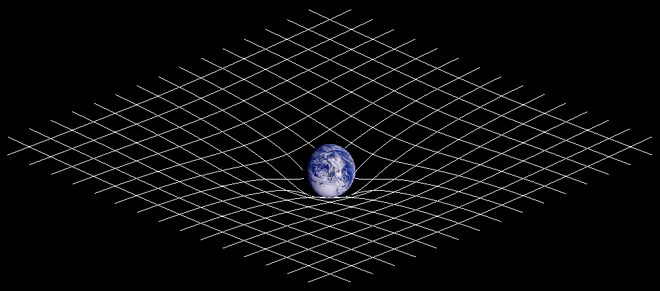
In a recent conversation with one of my sons, he expounded on the concept of an event horizon.  I had not heard of the concept and Wikipedia defines it in the following manner:  "In general relativity, an event horizon is a boundary in space-time beyond which events cannot affect an outside observer. In layman's terms, it is defined as "the point of no return" i.e. the point at which the gravitational pull becomes so great as to make escape impossible. The most common case of an event horizon is that surrounding a black hole. Light emitted from beyond the horizon can never reach the outside observer. Likewise, any object approaching the horizon from the observer's side appears to slow down and never quite pass through the horizon. The traveling object, however, experiences no strange effects and does, in fact, pass through the horizon in a finite amount of proper time."

File:Spacetime curvature.png 
My son was commenting about his own event horizon.  I have been dwelling on his comment for quite some time.  His event horizon will change him.  When he leaves, I will have an image in my mind and heart of who he is.  Those images will be frozen in time until I see him again.  I have been thinking of other event horizons.  Some of the images I have of my sons, my mother, my father, and my siblings are frozen in time.  The shift of those images at times can be shocking.  I wonder what event horizons I have gone through, may be none as drastic as my son's.  I do see event horizons that are coming for my parents and I wish time could freeze.  I have thought about this blog more than any other blog I have composed.  One of my friends reached his event horizon and I have not seen him for quite some time.  I wonder how my image of him will shift.  I am true to my words . . . I am rambling.